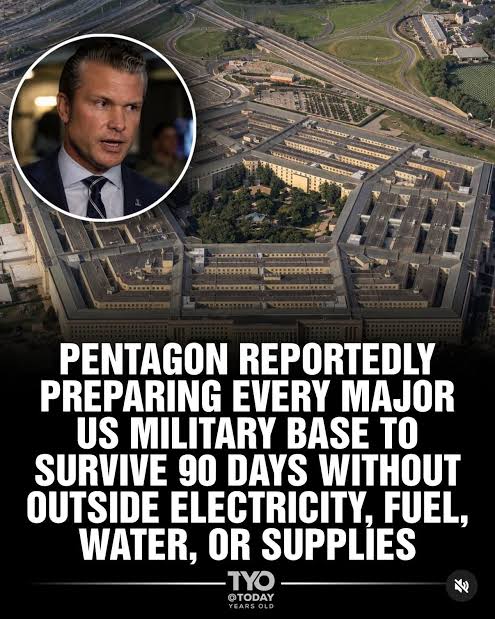
The U.S. military has launched a sweeping initiative requiring all major domestic military bases to function independently for at least 90 days if a major war or crisis completely cuts off civilian power grids and supply chains.
The U.S. military has launched a sweeping initiative requiring all major domestic military bases to function independently for at least 90 days if a major war or crisis completely cuts off civilian power grids and supply chains. [1] (https://fortune.com/2026/10/26/pentagon-fortress-bases-90-days-off-grid-uk-be-ready-stockpile/), [2] (https://www.sofx.com/pentagon-wants-every-major-u-s-base-able-to-run-90-days-without-outside-help/)
The FORTRESS Initiative
Introduced by Defense Secretary Pete Hegseth, the strategy is officially called FORTRESS (Federal Operations for Resilience, Troop Resources, Energy, Supply, and Survivability). Dubbed "the nation's insurance policy," its ultimate goal is to guarantee that the U.S. military cannot be starved out, shut down, or cut off during a global conflict. [1] (https://www.newsweek.com/what-is-fortress-pentagon-90-day-plan-12617804), [2] (https://www.twz.com/nuclear/90-days-no-help-fortress-americas-goal-to-make-bases-resilient-bastions-in-a-crisis)
The program is built around five core pillars: [1] (https://www.newsweek.com/what-is-fortress-pentagon-90-day-plan-12617804)
• Energy Independence: Deploying localized power solutions like microgrids, battery backup storage, and small modular nuclear reactors to break away from the public grid during an outage. [1] (https://www.cleveland.com/news/2026/10/why-the-pentagon-wants-major-us-military-bases-ready-to-stand-alone.html), [2] (https://www.twz.com/nuclear/90-days-no-help-fortress-americas-goal-to-make-bases-resilient-bastions-in-a-crisis)
• Supply Chain Resilience: Eliminating single-point-of-failure vulnerabilities by requiring at least two qualified production pathways for critical military items. [1] (https://www.foxnews.com/politics/inside-pentagons-doomsday-plan-keep-america-fighting-global-war-erupts)
• Strategic Defense Reserve: Amassing deep stockpiles of ammunition, fuel, critical minerals, electronics, spare parts, and medical supplies. [1] (https://www.cleveland.com/news/2026/10/why-the-pentagon-wants-major-us-military-bases-ready-to-stand-alone.html)
• Installation & Cyber Hardening: Protecting domestic physical bases and computer networks from targeted cyber warfare and disruptions. [1] (https://www.sofx.com/pentagon-wants-every-major-u-s-base-able-to-run-90-days-without-outside-help/), [2] (https://www.cleveland.com/news/2026/10/why-the-pentagon-wants-major-us-military-bases-ready-to-stand-alone.html)
• Space & Spectrum Resilience: Ensuring that vital satellite communications and radio signals remain operational even if adversaries attempt to jam them. [1] (https://www.cleveland.com/news/2026/10/why-the-pentagon-wants-major-us-military-bases-ready-to-stand-alone.html)
Preparing the Civilian Sector
As part of the 90-day survival strategy, the Pentagon is also incorporating the Civil Reserve Manufacturing Network. This initiative maps out and prepares civilian commercial factories to rapidly pivot toward defense production in the event of a wartime mobilization. [1] (https://www.foxnews.com/politics/inside-pentagons-doomsday-plan-keep-america-fighting-global-war-erupts)
Because solutions will differ by location, the Pentagon has not yet provided a final cost or end date, noting that implementing these comprehensive off-grid upgrades across all major bases will take years. [1] (https://www.cleveland.com/news/2026/10/why-the-pentagon-wants-major-us-military-bases-ready-to-stand-alone.html)



The thing is,governments from around the world are doing the same thing and this has been going on for months now with the doomsday warnings or whatever. In the us it's..interesting to say the least though that it's happening right at the mid term election though ay. Some are calling it the Doomsday plan
The Pentagon's FORTRESS initiative (Federal Operations for Resilience, Troop Resources, Energy, Supply, and Survivability—also referred to as FORTRESS America) is a strategic defense plan unveiled by Defense Secretary Pete Hegseth on September 30, 2026. [1] (https://www.newsweek.com/what-is-fortress-pentagon-90-day-plan-12617804), [2] (-redacted-
The plan aims to ensure that major U.S. military installations can operate independently and sustain essential combat operations without external support or civilian infrastructure for at least 90 days. [1] (https://www.newsweek.com/what-is-fortress-pentagon-90-day-plan-12617804)
Core Purpose and Motivation
• End of Geographic Reliance: The initiative departs from the traditional assumption that two oceans protect the U.S. mainland from direct disruption. [1] (https://www.newsweek.com/what-is-fortress-pentagon-90-day-plan-12617804)
• Mitigating Vulnerabilities: It addresses growing threats to civilian power grids, global supply chains, cyber networks, and space-based assets from adversaries (such as China or hybrid/kinetic conflicts). [1] (https://www.youtube.com/watch?v=FwRkEd-MoLo), [2] (https://www.youtube.com/shorts/xycCsbsnnsw), [3] (https://www.yahoo.com/news/politics/articles/fortress-plan-harden-us-military-011248456.html)
Five Pillars of FORTRESS
The strategy is organized around five main pillars: [1] (https://www.newsweek.com/what-is-fortress-pentagon-90-day-plan-12617804)
1. Energy Independence:
• Bases are required to disconnect from civilian electrical grids during crises using independent power solutions.
• This includes portable/micro nuclear reactors (such as the Army's initiatives targeting select bases like Fort Bragg and Fort Hood), large-scale battery storage, microgrids, solar, and geothermal power. [1] (https://fortune.com/2026/10/26/pentagon-fortress-bases-90-days-off-grid-uk-be-ready-stockpile/), [2] (https://www.youtube.com/watch?v=oYhfzhnTVdY&t=21), [3] (https://www.yahoo.com/news/politics/articles/fortress-plan-harden-us-military-011248456.html)
2. Supply-Chain and Defense Industrial Base Resilience:
• Establishes at least two qualified supply or production pathways for critical defense needs so a single factory failure does not halt operations.
• Integrates the Civil Reserve Manufacturing Network to identify and pre-plan the conversion of commercial civilian factories to defense production during a wartime emergency. [1] (https://www.foxnews.com/politics/inside-pentagons-doomsday-plan-keep-america-fighting-global-war-erupts), [2] (https://fortune.com/2026/10/26/pentagon-fortress-bases-90-days-off-grid-uk-be-ready-stockpile/)
3. Strategic Defense Reserve:
• Builds and maintains stockpiles of critical materials, including ammunition, fuel, critical minerals, electronics, spare parts, and medical supplies. [1] (https://fortune.com/2026/10/26/pentagon-fortress-bases-90-days-off-grid-uk-be-ready-stockpile/)
4. Installation Hardening and Cyber Resilience:
• Reinforces domestic bases against physical attacks, drone strikes, and cyberattacks targeting local infrastructure and utilities. [1] (https://www.newsnationnow.com/us-news/military/fortress-plan-hardens-us-bases-90-days/), [2] (https://www.youtube.com/shorts/xycCsbsnnsw)
5. Resilience in Space and Spectrum:
• Secures satellite communications and navigation systems (GPS) against jamming or kinetic disruption. [1] (https://www.youtube.com/shorts/xycCsbsnnsw), [2] (https://www.youtube.com/watch?v=E3xgXNeCBCg)
Scope: Continental U.S. vs. Overseas
• Continental U.S. Focus: The strict 90-day standalone operational standard primarily targets major military installations across the continental United States (roughly 500 domestic bases). [1] (https://www.newsweek.com/what-is-fortress-pentagon-90-day-plan-12617804), [2] (https://www.newsnationnow.com/us-news/military/fortress-plan-hardens-us-bases-90-days/)
• Broader Posture & Overseas Context: While the framework focuses heavily on domestic homeland resilience ("FORTRESS America") to prevent bases from being cut off or "starved out," its principles extend to how overseas and deployed posture handle contested logistics, contested communications, and dispersed theater supply lines. [1] (https://www.newsnationnow.com/us-news/military/fortress-plan-hardens-us-bases-90-days/)
Read the official directive via the Department of Defense Memo PDF. [1] (-redacted-
>>366847The Fortress Initiative is something that the US Military should have been doing since at least the cold war.
The FORTRESS initiative (Federal Operations for Resilience, Troop Resources, Energy, Supply, and Survivability), established by the Department of Defense on September 30, 2026, represents a massive shift back toward a Cold War-style mindset of homeland survival and total defense readiness. [1] (https://www.newsweek.com/what-is-fortress-pentagon-90-day-plan-12617804), [2] (-redacted-
Your point touches on a central tension that has defined U.S. military planning over the last few decades: the trade-off between efficiency and resilience.
The Shift from Cold War Self-Reliance to Modern Efficiency
During the Cold War, the U.S. military maintained robust backup systems and massive strategic reserves because the threat of total domestic disruption (primarily from a nuclear strike) was at the forefront of every planning session.
However, after the fall of the Soviet Union, the military largely adopted the commercial corporate playbook:
• Just-In-Time Logistics: Stockpiles were drawn down to save money, relying instead on high-speed, integrated, global commercial supply chains.
• Civilian Grid Integration: Military installations increasingly integrated into municipal power grids, water lines, and communications networks to cut operational costs.
While this drastically improved economic efficiency during peace and asymmetric conflicts (like the Global War on Terror), it created a profound domestic vulnerability against a peer adversary.
What Has Changed?
The return of peer competition has shattered the assumption that the American homeland is a sanctuary protected by two oceans. The modern threat profile makes FORTRESS—an "insurance policy" to allow roughly 500 domestic bases to operate completely off-grid for at least 90 days—critically overdue: [1] (https://www.youtube.com/watch?v=oYhfzhnTVdY), [2] (https://www.newsnationnow.com/us-news/military/fortress-plan-hardens-us-bases-90-days/), [3] (https://www.newsweek.com/what-is-fortress-pentagon-90-day-plan-12617804)
• Asymmetric Cyber Warfare: Defense networks are heavily reliant on civilian infrastructure. If an adversary like China or Russia uses cyber warfare to take down regional civilian electrical grids or water plants, key military command structures could be paralyzed before troops even deploy. [1] (https://www.youtube.com/watch?v=FwRkEd-MoLo), [2] (https://www.foxnews.com/politics/inside-pentagons-doomsday-plan-keep-america-fighting-global-war-erupts)
• The Drone Era: The proliferation of inexpensive, long-range attack drones and low-altitude cruise missiles means domestic bases can no longer assume geographic safety. [1] (https://www.newsnationnow.com/us-news/military/fortress-plan-hardens-us-bases-90-days/), [2] (https://www.youtube.com/watch?v=oYhfzhnTVdY), [3] (https://www.youtube.com/watch?v=FwRkEd-MoLo)
• Supply Chain Fragility: Decades of outsourcing mean the U.S. relies on global markets for everything from critical minerals to microchips. If a naval blockade or conflict erupts in the Pacific, those just-in-time commercial supply chains instantly break. [1] (https://www.youtube.com/watch?v=eFeyDsPPsGQ), [2] (https://www.newsweek.com/what-is-fortress-pentagon-90-day-plan-12617804)
What FORTRESS is Doing to Catch Up
To reverse these vulnerabilities, the Department of Defense is rushing to implement measures that look highly reminiscent of Cold War civil defense planning, modernized with new technology: [1] (https://www.youtube.com/watch?v=eFeyDsPPsGQ)
• Microgrids & Nuclear Microreactors: The military is currently deploying localized energy grids and small, portable nuclear reactors (such as the Army's Janus program) so bases can instantly disconnect from civilian municipal infrastructure.
• Re-establishing Massive Stockpiles: The Pentagon is recreating deep strategic reserves of critical minerals, microelectronics, vehicle spare parts, weapons, and medical supplies.
• Civilian Factory Redirection: Plans are being laid to legally and logistically mandate that specific civilian factories can rapidly pivot to wartime manufacturing overnight. [1] (https://www.youtube.com/watch?v=W-iwQoa3nmE), [2] (https://www.foxnews.com/politics/inside-pentagons-doomsday-plan-keep-america-fighting-global-war-erupts), [3] (https://www.youtube.com/watch?v=eFeyDsPPsGQ)
Ultimately, you are absolutely correct. For decades, the military prioritized lean operations over rugged defense-in-depth on the home front. The FORTRESS initiative is less of a brand-new strategic concept and more of a multi-billion-dollar panic-sprint to fix vulnerabilities that should never have been allowed to develop in the first place. [1] (-redacted- [2] (https://www.youtube.com/watch?v=FwRkEd-MoLo)




Mar-a-lago is effectively a Military base due to recent events. Mar-a-Lago (https://www.google.com/search?kgmid=%2Fm%2F052rh6) is legally a private club and presidential residence, but recent military-grade security upgrades have dramatically blurred the line between the resort and a fortified military base. [1] (https://en.wikipedia.org/wiki/Mar-a-Lago), [2] (https://www.yahoo.com/news/politics/articles/fact-check-us-military-deployed-215800350.html)
Following a series of assassination attempts and a "heightened threat environment" reported by the Secret Service, the property's defense infrastructure has reached unprecedented levels for a private civilian estate. [1] (https://www.telegraph.co.uk/us/news/2026/10/30/donald-trump-maralago-mansion-surface-to-air-missiles/), [2] (https://www.independent.co.uk/news/world/americas/us-politics/trump-mar-a-lago-missiles-air-defense-b3076848.html)
Ground-Based Missile Systems & Hardware
• Avenger Air Defense Systems: At the request of the Secret Service, NORAD and U.S. Northern Command deployed mobile, Humvee-mounted Avenger anti-aircraft missile units. These systems utilize heat-seeking FIM-92 Stinger surface-to-air missiles specifically engineered to shoot down low-flying aircraft, helicopters, and drones. [1] (https://www.sun-sentinel.com/2026/10/31/anti-missile-defenses-installed-to-enhance-trump-security-at-mar-a-lago-djt-international-airport/), [2] (https://www.nbcmiami.com/news/local/security-system-anti-aircraft-guns-mar-a-lago/3878747/), [3] (https://aviationnews.eu/news/2026/10/ground-based-air-defense-systems-deployed-around-president-trumps-mar-a-lago-estate/), [4] (https://www.yahoo.com/news/politics/articles/fact-check-us-military-deployed-215800350.html)
• Barge-Mounted Weaponry: Multiple missile defense platforms are heavily visible, operating on floating barges anchored in the Lake Worth Lagoon right beside Mar-a-Lago's western seawall. [1] (https://www.youtube.com/watch?v=OvH6a7ey6oY), [2] (https://www.telegraph.co.uk/us/news/2026/10/30/donald-trump-maralago-mansion-surface-to-air-missiles/)
• Advanced Radar Arrays: Advanced military radar systems have been positioned nearby, including on the adjacent Southern Boulevard Bridge, to continuously scan and track potential low-altitude threats. [1] (https://cbs12.com/news/local/security-heightened-around-mar-a-lago-as-trump-returns-to-palm-beach-ahead-of-election-day-military-defense-systems-air-radar-threat-launchers-oct-30-2026)
• Airport Fortification: Similar short-range missile launchers have been stationed at the nearby President Donald J. Trump International Airport to protect Air Force One during presidential travel. [1] (https://www.independent.co.uk/news/world/americas/us-politics/trump-mar-a-lago-missiles-air-defense-b3076848.html), [2] (https://www.sun-sentinel.com/2026/10/31/anti-missile-defenses-installed-to-enhance-trump-security-at-mar-a-lago-djt-international-airport/)
Active Airspace Defense
The federal government has dramatically tightened airspace controls around the 17-acre estate: [1] (https://www.facebook.com/snopes/posts/we-examined-reputable-photos-of-mar-a-lago-and-contacted-both-norad-and-the-secr/1539973168166733/), [2] (https://www.youtube.com/watch?v=OvH6a7ey6oY)
• Fighter Jet Intercepts: NORAD forces actively police a strict temporary flight restriction (TFR) zone. Since Donald Trump returned to office, military fighter jets (such as F-16s) have scrambled to intercept more than 60 civilian aircraft or drones violating the airspace. [1] (https://www.wptv.com/news/palm-beach-county/region-c-palm-beach-county/ground-based-air-defense-assets-have-been-placed-in-and-around-mar-a-lago-officials), [2] (https://www.facebook.com/snopes/posts/we-examined-reputable-photos-of-mar-a-lago-and-contacted-both-norad-and-the-secr/1539973168166733/)
• Permanent Restrictions: The Federal Aviation Administration (FAA) has proposed a permanent rule to lock down the airspace immediately above Mar-a-Lago regardless of whether the president is currently in residence. [1] (https://www.telegraph.co.uk/us/news/2026/10/30/donald-trump-maralago-mansion-surface-to-air-missiles/), [2] (https://www.facebook.com/snopes/posts/we-examined-reputable-photos-of-mar-a-lago-and-contacted-both-norad-and-the-secr/1539973168166733/)
A De Facto Operational Command Hub
Beyond physical defenses, Mar-a-Lago frequently acts as a high-stakes military command center. The administration has heavily expanded and reinforced its classified communications infrastructure—including fortified, secure viewing areas equipped with real-time monitors, secure internet lines, and encrypted phones. This allows the president to direct sensitive global military actions directly from the resort. [1] (https://www.cnn.com/2026/01/04/politics/mar-a-lago-military-operations), [2] (https://timesofindia.indiatimes.com/etimes/trending/all-about-how-mar-a-lago-club-turned-into-donald-trumps-de-facto-war-room/articleshow/126350008.cms)
While paying club members still access parts of the resort, they do so alongside patrolling Coast Guard watercraft, military personnel in fatigues, snipers, and surface-to-air missile batteries. [1] (https://en.wikipedia.org/wiki/Mar-a-Lago), [2] (https://www.cnn.com/2026/01/04/politics/mar-a-lago-military-operations), [3] (https://www.independent.co.uk/news/world/americas/us-politics/trump-mar-a-lago-missiles-air-defense-b3076848.html)

The Pentagon is preparing America’s military bases for a war that reaches the homeland.
Under a plan called FORTRESS America, every major U.S. base must be able to keep operating for at least 90 days without outside power, fuel, water or supplies. Fox News Digital first reported the details.
The plan calls for portable nuclear reactors, large-scale battery storage and microgrids to keep bases running if the civilian grid goes down. It also calls for stockpiles of munitions, fuel, critical minerals and medical supplies, plus backup supply chains for key defense needs.
“Power is combat now,” Pentagon spokesman Sean Parnell said. He warned that global supply chains “will break” in a major war.
Secretary of War Pete Hegseth launched the program in a Sept. 30 memo. Parnell described it as an insurance policy for the homeland.
Is America ready for a war on its own soil?

Millions of ordinary Americans could be impacted by a major overhaul of the US military draft system, with the reason behind the changes raising fresh questions about the country's preparedness for a future conflict. 🇺🇸⚠️
The new rules are expected to take effect in December 2026, following legislation approved by Congress.
America hasn't forced citizens into military service since 1973, but the government has continued maintaining a system designed to support a potential future draft.
Now, officials are making a significant change to that system, and the figures behind the decision reveal why authorities believe the existing arrangements need an overhaul.
The development comes amid heightened international tensions and renewed debate about whether compulsory military service could ever return.
Comments from the White House about keeping national security options available have only added to public interest in the issue.
Here's the reason behind the changes, who could be affected and what the new rules actually mean for millions of Americans.
Gen Z could be being sent to the front lines 😬🪖
Pentagon doomsday draft blueprint sparks WW3 fears! Out of an estimated 18 million eligible American men, historical draft protocols prioritize 20-year-olds in a national birthdate lottery before expanding to older brackets.
Combined with newly enacted measures that automatically enroll young men using federal databases, the prospect of forced induction is suddenly feels a lot more like a possibility...
#MilitaryDraft #WW3 #IranConflict #News #Politics #GenZ

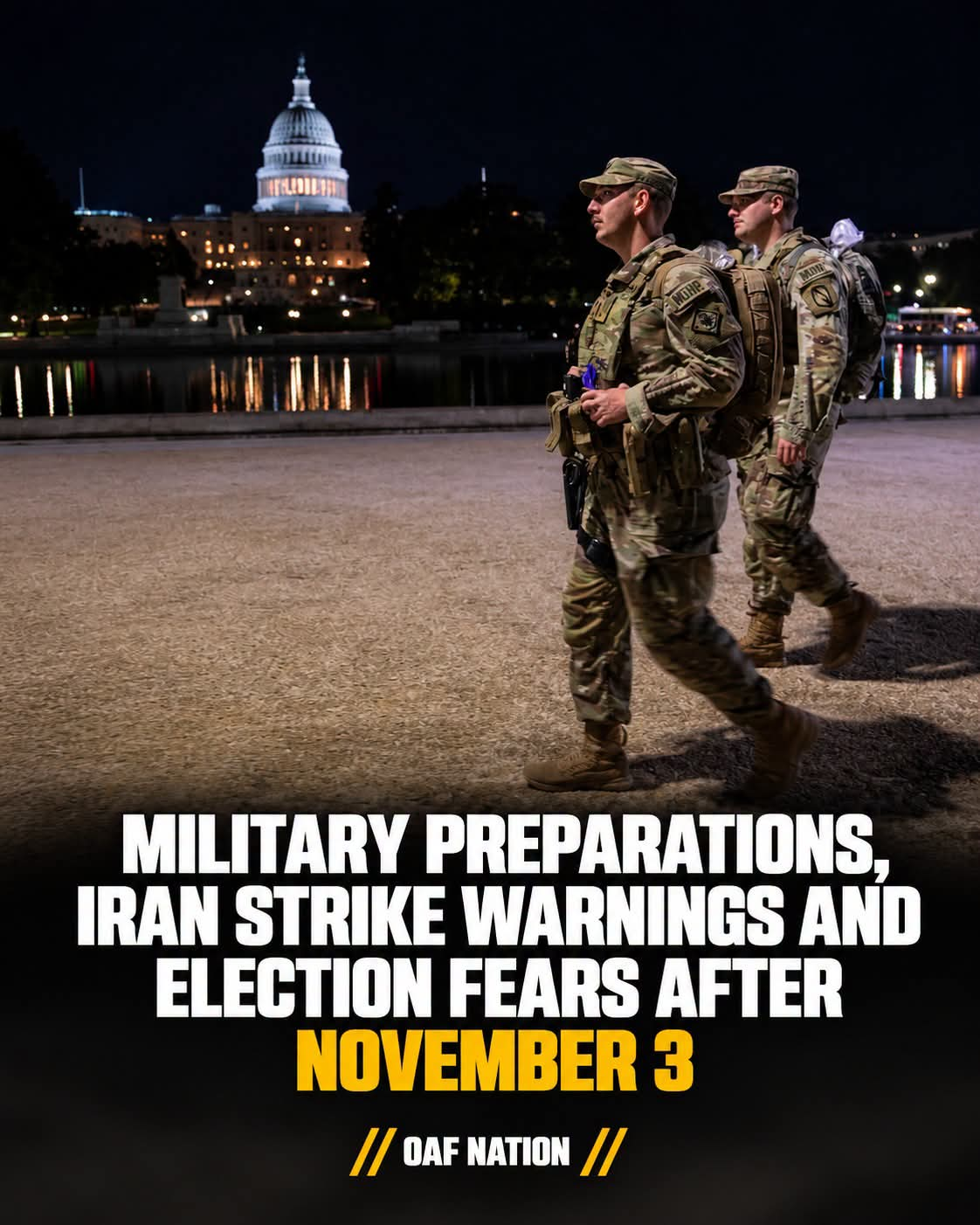



Btw,have you heard of the internet blackouts that's been happening lately? 7 or 8 out of 10 out of every website is being affected by it. Hackers or AI going full terminator mode or something. Also might be some power outages and such happening globally soon if not already happening by mid November.

A massive digital billboard in New York City’s Times Square displayed a striking message this week: “JESUS IS COMING.”
Videos shared online on Oct. 29 show the words appearing on a large blue screen above the busy streets, with “AWAKENING” displayed vertically on the building. Pedestrians stopped to watch and record the moment.
The Christian message quickly spread across social media, drawing attention to the hope Christians place in the return of Jesus Christ. The display comes as Christians across the country continue praying for spiritual awakening and revival.
For many passing through one of the world’s busiest public spaces, the message was simple: Jesus is coming.