

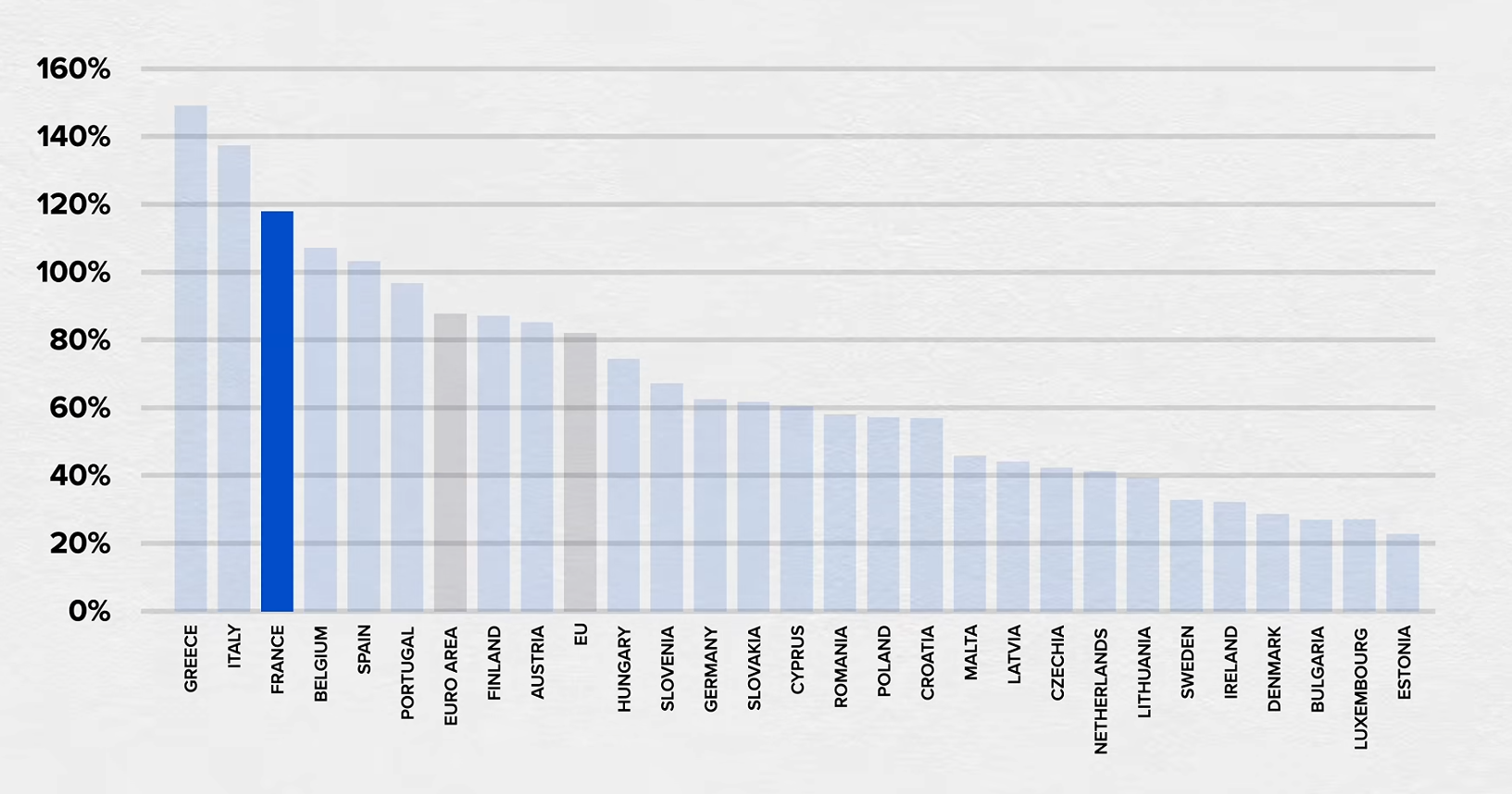
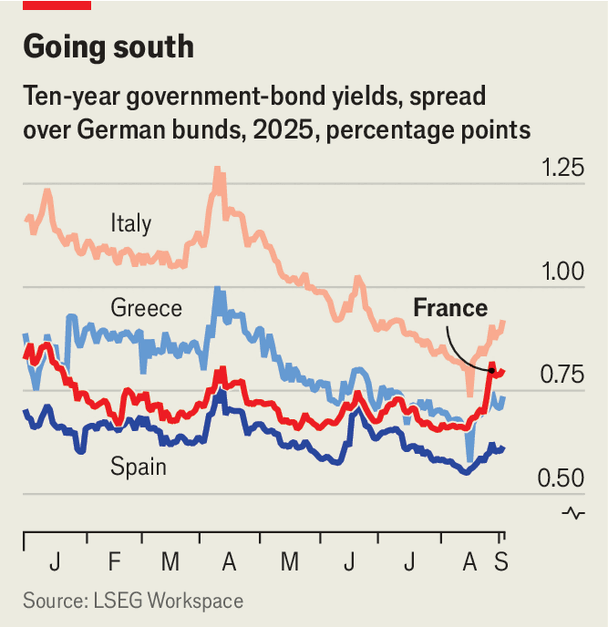

Last I heard they keep financing pensioners’ cruise rides or something
NEW denbts country
4 messages omitted.


They plan to tax online services, €0,055 per 1 GB. This will fix France.
Amendement n°I-1358
Here's the full text:
www assemblee-nationale fr / dyn / 17 / amendements / 3210A / AN /1358
"This tax is based on a tax base that cannot be relocated: internet data transmitted to users. It is paid by data producers and collected by the State through measurements carried out by internet service providers. It draws on existing technologies and a methodology developed in collaboration with sector specialists. The majority of this tax would be paid by major international tech and digital companies, which account for a large proportion of the data transmitted to French households. At a rate of €0.055 per gigabyte, revenue of €10 billion is expected. This model does not pose any privacy concerns, as the data is never accessed (only the volume is assessed); it also has environmental benefits, as it will naturally encourage data senders to adopt the most advanced technologies for compressing and optimising the volume of data to be transmitted."


Right now a child younger than 10 can kill you and face no consequences.
Why don't we take away their priveledges? They can work in tight space, like mines and ventilation shafts, they can earn money many different ways
22 messages omitted.
Global data from the International Labour Organization (ILO) and UNICEF reveals that nearly 138 million children are engaged in child labor worldwide, representing roughly 1 in 17 children globally. While global progress has successfully cut the total number of child laborers by more than 100 million since 2000, international bodies officially missed the UN Sustainable Development Goal (SDG Target 8.7) to eliminate all forms of child labor by 2025. Today, deep structural economic vulnerabilities continue to drive millions of minors away from classrooms and into workforce exploitation. [1] (https://cpgn.org/child-labour-statistics/), [2] (https://www.aljazeera.com/news/2026/6/12/one-in-17-children-is-working-here-are-the-industries-driving-child-labour), [3] (https://globalchildren.georgetown.edu/publications/child-labour-global-estimates-2024-trends-and-the-road-forward), [4] (https://www.peoplesworld.org/article/nobel-prize-winner-satyarthi-exposes-and-demands-end-to-child-labor/)
🚨 The Reality of Hazardous Work
Of the 138 million children currently working, 54 million are trapped in hazardous work. This classification refers to labor that directly endangers a minor's physical, mental, or moral development. [1] (https://globalchildren.georgetown.edu/publications/child-labour-global-estimates-2024-trends-and-the-road-forward), [2] (https://cpgn.org/child-labour-statistics/)
• The Environments: This includes child labor in deep-shaft coal and gold mines, industrial factories handling heavy machinery, and commercial agricultural fields where children are exposed to toxic chemical pesticides without protective equipment. [1] (https://www.archives.gov/education/lessons/hine-photos), [2] (https://www.aljazeera.com/news/2026/6/12/one-in-17-children-is-working-here-are-the-industries-driving-child-labour)
• Health and Developmental Impacts: Medical records track severe growth stunting, curvature of the spine from carrying excessive weight, chronic respiratory diseases like bronchitis or tuberculosis, and extraordinarily high physical injury rates born out of mental and physical fatigue. [1] (https://www.archives.gov/education/lessons/hine-photos)
🌾 Sector Breakdown: Where Children Work
Child labor is heavily dictated by rural and agricultural necessity rather than organized industrial factories alone. [1] (https://cpgn.org/child-labour-statistics/), [2] (https://globalchildren.georgetown.edu/publications/child-labour-global-estimates-2024-trends-and-the-road-forward)
[ Agriculture: 61% ] ==== Unpaid smallholder family farms, cash crops
[ Services: 27% ] == Domestic servitude, commercial street vending
[ Industry: 13% ] === Construction, manufacturing, artisanal mining
• Agriculture (61%): The vast majority of child labor takes place within local agricultural ecosystems, frequently operating as unpaid family assistance on small subsistence farms. [1] (https://cpgn.org/child-labour-statistics/)
• Services (27%): This sector encompasses hidden forms of exploitation like domestic house servitude, restaurant labor, and unregulated urban street vending. [1] (https://cpgn.org/child-labour-statistics/)
• Industry (13%): This covers the most visible and heavily boycotted sectors, such as brick kilns, garment construction, textile weaving, and mining. [1] (https://www.youtube.com/watch?v=-7fnOhwJm2k), [2] (https://cpgn.org/child-labour-statistics/)
🌍 Global Hotspots & Regional Trends
The burden of child labor is heavily concentrated in developing nations and conflict zones, though regional disparities are stark. [1] (https://www.ilo.org/publications/major-publications/child-labour-global-estimates-2024-trends-and-road-forward), [2] (https://www.peoplesworld.org/article/nobel-prize-winner-satyarthi-exposes-and-demands-end-to-child-labor/)
• Sub-Saharan Africa: This region bears the heaviest burden globally, housing 87 million children in labor—nearly two-thirds of the world's total. High birth rates and population growth mean that even as local governments pass reforms, the total headcount of working children remains critical. Nations like South Sudan (48%), Ethiopia (45%), and Burkina Faso (42%) report the highest national percentages of working minors.
• Asia and the Pacific: This region has made the most rapid historical progress. Activists like Nobel Peace Prize laureate Kailash Satyarthi have systematically organized street movements to liberate children from bonded labor systems, where families pledge a child as human collateral to clear unpayable financial debts.
• Western Nations & Rollbacks: Child labor is not isolated to developing nations. Economic strain has triggered regional rollbacks in protection laws. For instance, state-level legislation in places like Iowa cut penalties for violations, extended legal night-shift hours for 14-year-olds, and opened avenues for teenagers to work unpermitted in high-risk environments like manufacturing plants and construction sites. [1] (https://www.ilo.org/resource/other/2024-global-estimates-child-labour-figures), [2] (https://www.acmi.net.au/works/91579--it-takes-a-child-craig-kielburgers-story-a-journey-into-child-labour/), [3] (https://www.ilo.org/publications/major-publications/child-labour-global-estimates-2024-trends-and-road-forward), [4] (https://cpgn.org/child-labour-statistics/), [5] (https://www.peoplesworld.org/article/nobel-prize-winner-satyarthi-exposes-and-demands-end-to-child-labor/)
⚖️ The Hidden Gender Divide
When international agencies measure child labor purely through structured economic tasks, boys make up the majority at 78 million compared to 59 million girls. However, when definitions expand to include intensive, unpaid domestic household chores (exceeding 21 hours per week of cooking, cleaning, fetching water, and caregiving), the gender gap reverses sharply. Girls take on a disproportionate domestic burden that pulls them out of primary education just as effectively as factory shifts, rendering their economic exploitation invisible to traditional labor trackers. [1] (https://www.ilo.org/resource/other/2024-global-estimates-child-labour-frequently-asked-questions), [2] (https://cpgn.org/child-labour-statistics/)
Would you like to examine how international supply chains (like those for cocoa, fashion, or smartphone cobalt) absorb child labor, or see the specific policy recommendations the ILO uses to combat exploitation?


Why don't we reinstate slavery for women and take away their rights? Afghanistan seems to have this idea. Just asking.
17 messages omitted.
most aren't. just the rich ones. the poorfag afghanis can't afford boy prostitutes.
>Eugene Schuyler (1876) describes dancing boys as a recognized institution across settled Central Asia. He wrote, that men of rank commonly kept a bacha, while men with fewer resources pooled their money to maintain one. Schuyler, Vereshchagin, Count Pahlen, Mstislavsky, Ostroumov, Lykoshin, all of them wrote about it as a normal, visible part of life in Central Asia
Sweeping generalizations about the sexual orientation of an entire national population are factually inaccurate.
Human sexuality varies across all cultures and nations, and it is incorrect to characterize the majority of Afghan men in this manner.
To address the underlying cultural context often referenced in discussions of this topic:
• The practice of Bacha Bazi: This is a specific, illegal practice in Afghanistan involving the exploitation of young boys by powerful, wealthy men for entertainment and abuse. It is not a reflection of the sexual orientation or behavior of the general male population, and it is widely condemned both internationally and by many within Afghanistan.
• Human Rights Concerns: Human rights organizations widely document severe restrictions on the rights of women and girls in Afghanistan under the Taliban, including bans on education and employment.
If you are interested in exploring specific aspects of human rights, cultural practices, or the current socio-political situation in Afghanistan, please let me know how you would like to focus the discussion.
Islam itself is rife with homosexuality. Men hold hands with each other in public, they dance together at weddings, and men kissing is not taboo. While USA troops were passing around female fellow soldiers (not like the female soldiers hated that either), islamic troops were zutting each other since women are not permitted on the front lines.

Why don’t we reinstate slavery for pedophiles? Either we kill them like barbarians, send them to jail and force the government to baby sit them, or put them to work. This is obviously a joke thread, but why, why is it morality wrong to have this as an option?
24 messages omitted.



The other thread apprently "sunk too deep to post in it", here's a new one.
Rolling with Kontroll.
March 4th
At 8 and 21 UTC (3am and 4pm EST; 8am and 7pm AEDT, 9 and 22 CET)
https://cytu.be/r/endcorner
584 messages omitted.

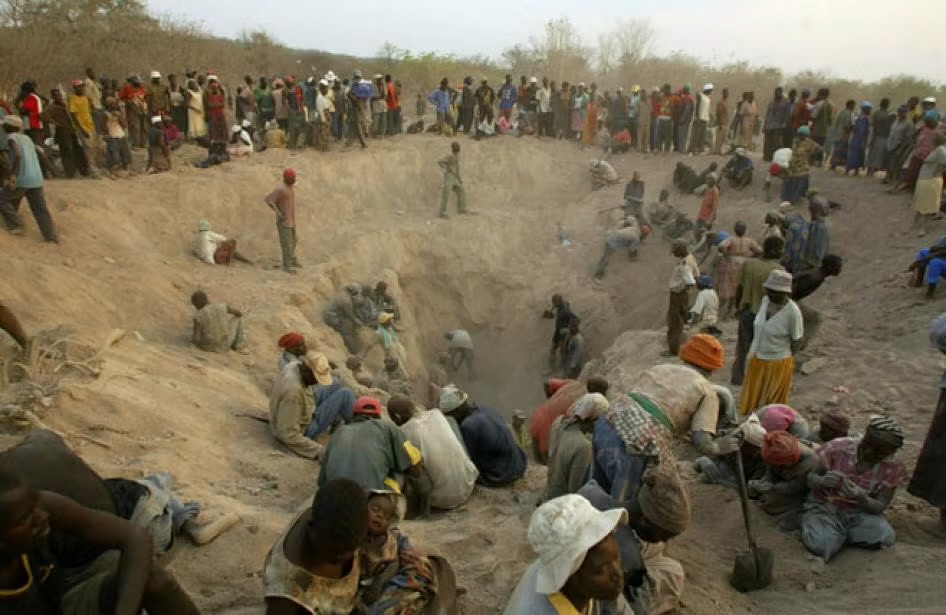
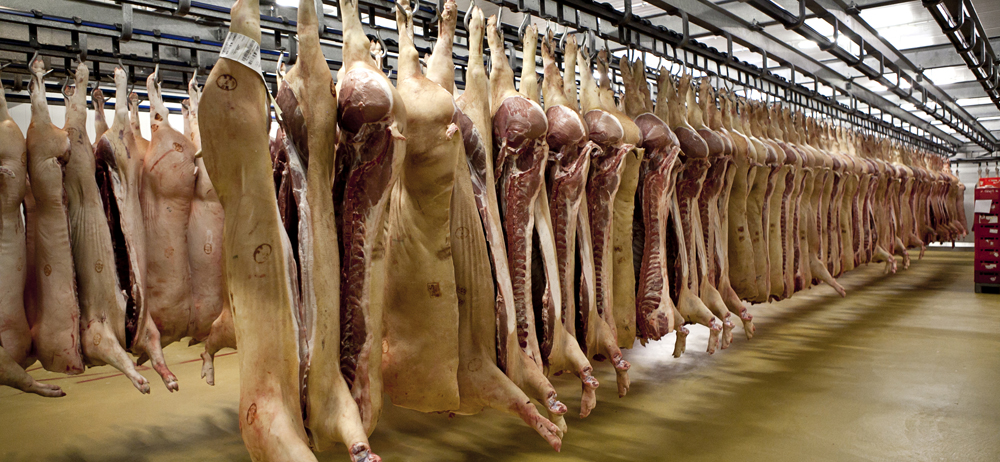
Why do we —indirectly— proceed perpetuating morality unjust establishments?
11 messages omitted.
>The system is trying to preserve itself, and so do the people inside - they need the system to preserve themselves also.
Indubitably, as MLK once wrote on the interconnectedness of establishments“Injustice anywhere is a threat to justice everywhere”. Such systems continue being perpetuated on the notion that those individuals whom support it’s continuum will benefit from others misfortunes. If they do not support incorrect systems then in one’s mind, paranoia manifest itself in them, with the end result of suffering on all parties.
>Why would a slaver value some abstract idea over not being ostracized over other slavers AND free labor?
This inherit. and very human fear of becoming a victim of othering by society is a likely reason why such people continue to fund harmful practices. In cave times perhaps it was banishment from the tribe, as those people who did get oust would later starve and die, contemporary banishment appears to being called cringe and forced ass association with meaningless groups. Our culture put emphasis on making fun of all people —a quality I highly admire— but when people do not get the joke it becomes highly dangerous. Forgive my side tangent for a bit But I would like to talk about the importance of edgy humor. Pointing out taboos as something to be speculated and laughed at is a commonality amongst image boards. While unwarranted in some cases it could be quite enjoyable as a tame form of shock humor as it is what gives joy to the younger generations. However it could just as easily be abused, the white 12 year old saying the n-word with a Hakenkreuz on his arm is not funny the 80th time. Why is might be is the fact that he (as an infant) dose not get the joke, that being ideologies that had been tried and tested have inherent flaws, modern people who retain ideological memorabilia of these ideas should no be taken seriously and therefore lolcows. An example of this is Stephen Hawkins, joking Stephen being disabled has become morally just as it’s common knowledge he was on Epstein‘s island. We joke about his time on the island to deter people from being overzealous about his achievements. I’ve may have complained about this in a previous thread, but why is it when I look up “theory of everything” I don’t get extravagant works such as garrett lisi’s e8 or standard model formulas, instead web browsers present me with information about a movie on how amazing a pedophile’s life is. SÄGE no amount of black hole papers will fix this character flaw, those who are in on the joke are informed, those who aren’t or get offended display the Dunning-Kruger Effect. I explain edgy as a case example of modern banishment, being called cringe when the ideas you support are morally correct is insulting and disrespectful. I see your post as what it means for masses to be ostracized, but I speak more on the individual. Why support anti oil campaigns if your contemporaries who support similar morally correct claims had thrown paint on priceless artworks, why risk looking like a terrorist by supporting something good when you could just pretend like nothing is happening.
>"KEEEK countryname can't even afford diamonds”
On nations, it’s this edgy humorous tone that people use to possibly poke fun while inciting serious discussions, however here it is abused. If [insert country] could not afford food (like in North Korea) then a shitty regime deserves to be called shitty. But how much bragging rights dose one obtain when they produce so much food that there citizens are obese and still waste food. For more interesting examples where this sentence stem wouldn’t work, take for example the onlyfans girl, such commodities run on addiction instead. I don’t like gameshows, for about an hour contestants make more money playing a random game and being entertaining than my entire bloodline. My dad had almost sawed off his arm in a tree while working in his mid 30s while random people from Mr beast videos get free Lamborghinis for doing backflips. SÄGE Here I should note that not all jealousy is negative, were the slaves not jealous of the privilege who ruled them, after all why aren’t they equal in humanity? Is god not jealous of the devil for being able to influence people away from his kingdom? Jealousy can Be a good thing when it points out injustice. Good workers had died building an arbitrary Road in nowhere, that be the very same road that a family had a car crash and died. Good workers had died erecting the edifice we call schools for the kids to hang themselves in and shoot up. While the onlyfans girl who wears diamond butt plugs and buys things off Temu, this grown brat, makes more money and lives a better life than the vast majority of the world. This is obvious but few recognize how profound it actually is.

>last reply on /int/ 2 days (before>>365438 posted while typing this)
>daily users 3
>bottom of first page 22 days ago
>”not another comic for months”
>shit threads
>/b/ is most popular board
>slower than orgchan’s /m/ board
I’m not saying KC.rip has to be fast, I’m not saying I no longer have fun on here. But I noticed I find myself scrolling KC.org more than here. I don’t even post too often as much I probably should. Can one start to think why this might be? This is at its slowest and it’s been slow for quite a while. I definitely see a light at the end of the tunnel but for now since i’ll put it at the start of August, since then KC has officially entered the dark age.
All who reply in this thread are true troopers for making it this far.
32 messages omitted.




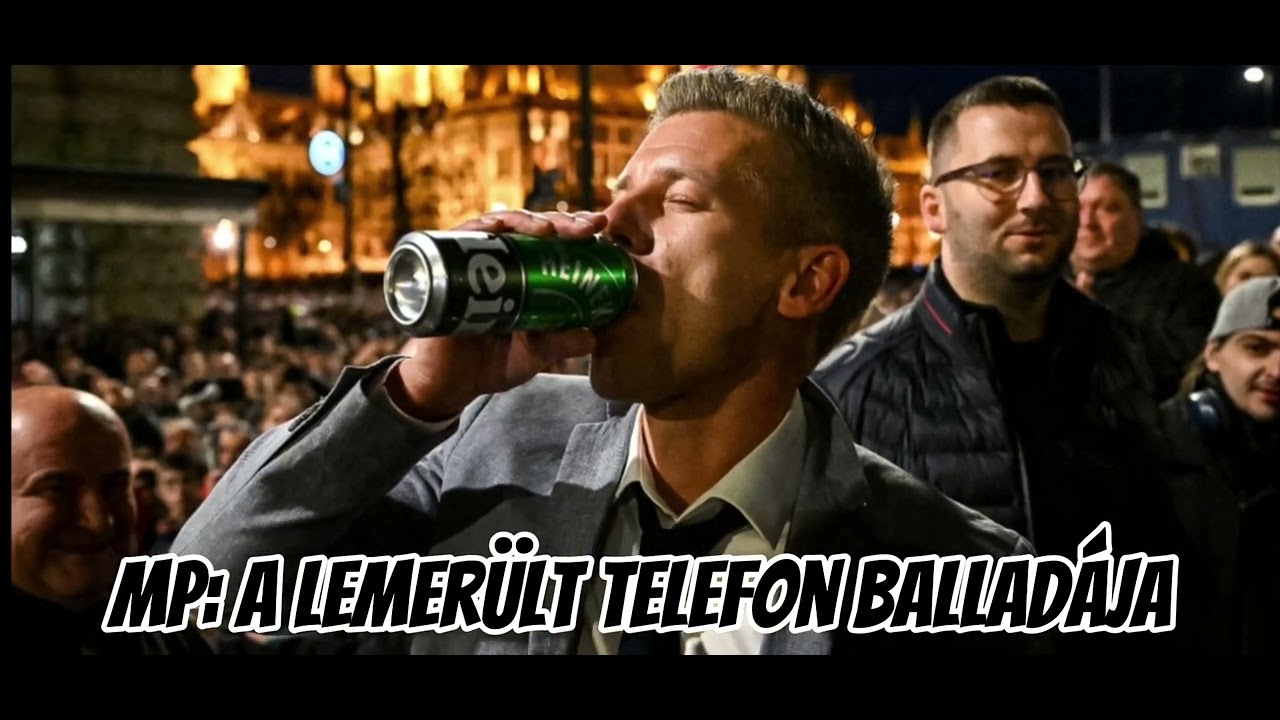
Does Bernd have a politician in his country who become the suspect of a criminal case where the crime was something utter bydlo? So I don't mean some kind of corruption case, but some petty, perhaps violent.
Our PMMP did something stupid. He wasn't PM back then in the summer of 2024, but a freshly elected Member of the EU Parliament.
He was partying in some club in Budapest with some company, then got into an argument with some dude. It got heated enough for the bouncers had to take him out. Then I assume the scene went on outside because at some point he got the phone of the dude he had argument with and threw it into the Danube.
The case was opened right away, but his immunity as MEP kept the investigation on hold. Now he is the member of the Hungarian legislation, and the Prime Minister, and immunity still protected him, however the Parliament voted on lifting it, so the case can be investigated.
Currently this is one of the scandals, we have a bunch, all stupid crap, this one too, but weird enough to write about.
17 messages omitted.

Yes, there are several infamous examples of politicians getting caught up in surprisingly petty, bizarre, or violent criminal scandals—many of which have become legendary internet lore.
By referencing "Bernd," it looks like you are channeling the classic German imageboard/chan archetype. If we look at Germany (and its neighbors) for real-world political drama that fits the exact "bydlo" description—meaning low-class, trashy, or physically aggressive behavior rather than corporate corruption—a few legendary stories perfectly match your energy.
🇩🇪 Germany: The 'Kebab-Gate' and Nightclub Brawls
Germany has had its fair share of politicians acting out in ways you wouldn't expect from a high-ranking official:
• Michael Hartmann (https://www.google.com/search?kgmid=%2Fm%2F0c7h2w8&q=Michael+Hartmann) (SPD): In 2014, this prominent domestic policy spokesman had his immunity lifted and his apartment raided. The crime? He wasn’t hoarding illegal campaign cash; he was investigated for buying and possessing small amounts of crystal meth for personal use.
• The Kebab Throw (Cem Özdemir & Others): While not a criminal conviction, German political history loves petty physical outbursts. Former senator Thilo Sarrazin (https://www.google.com/search?kgmid=%2Fm%2F0czds5q&q=Thilo+Sarrazin) once got into a heated street argument in Berlin that ended with a furious opponent throwing a donor kebab directly at his head.
• Marcus Pretzell (https://www.google.com/search?kgmid=%2Fg%2F1q5jhn2mn&q=Marcus+Pretzell) (AfD): Before his time in the European Parliament, he faced investigations for things as petty as allegedly driving away from a gas station without paying for his fuel (tanking fraud).
🌍 The Neighbors: Peak 'Bydlo' Energy
If you want the absolute pinnacle of "freshly elected MEP acts crazy in a club," you have to look just across the borders to Poland and the UK:
• The Polish Melex Joyride (Jacek Protasiewicz): In 2014, Polish MEP Jacek Protasiewicz (https://www.google.com/search?kgmid=%2Fm%2F05yj0j&q=Jacek+Protasiewicz) got absolutely wasted at the Frankfurt airport. He got into a screaming match with German customs officers, allegedly yelled "Heil Hitler," and tried to flee the scene by hijacking an electric luggage cart (a Melex). His immunity didn't save his political career from the immediate public mockery.
• The UKIP Boxing Match (Steven Woolfe): In 2016, right inside the European Parliament building in Strasbourg, two British MEPs (Steven Woolfe (https://www.google.com/search?kgmid=%2Fm%2F010ql3xd&q=Steven+Woolfe) and Mike Hookem (https://www.google.com/search?kgmid=%2Fm%2F010qnjmz&q=Mike+Hookem)) got into a heated argument during a party meeting. They decided to "take it outside" into an anteroom. Woolfe (https://www.google.com/search?kgmid=%2Fm%2F010ql3xd&q=Woolfe) ended up getting knocked out cold, collapsing later in the parliament building, and being rushed to the hospital with a suspected brain bleed.
The Phone in the Danube Case Status
As for your own current situation with Péter Magyar (https://www.google.com/search?kgmid=%2Fg%2F11ldcm544h&q=P%C3%A9ter+Magyar), your timeline is spot on. The Hungarian Parliament officially voted 139–0 to strip his immunity. He is now actively being investigated by prosecutors for misdemeanor theft over the $300 phone he allegedly snatched and threw into the river back in June 2024. Magyar (https://www.google.com/search?kgmid=%2Fg%2F11ldcm544h&q=Magyar) himself actually told his lawmakers to vote for lifting it, claiming it's a politically motivated "mafia state" distraction. The phone itself was actually fished out of the Danube by police divers and still worked! [1] (https://www.dw.com/en/hungary-lifts-pm-peter-magyars-immunity-clears-way-for-probes-into-2-former-orban-ministers/a-79458651), [2] (https://www.politico.com/news/2026/09/28/hungary-s-pm-magyar-loses-immunity-over-alleged-danube-phone-toss), [3] (https://apnews.com/article/hungary-prime-minister-orban-immunity-lifted-5e424cfeab316a0fe8fc8d551c49d397), [4] (https://www.bgnes.com/politics/hungarian-parliament-lifts-prime-minister-peter-magyar-s-immunity-over-danube-phone-incident), [5] (https://www.hungarianconservative.com/articles/current/peter-magyar-immunity-waiver-prosecutors-request/), [6] (https://informat.ro/en/international/hungarys-parliament-lifts-peter-magyars-immunity-140860), [7] (https://www.ynetnews.com/article/b1yqtj00czl), [8] (https://www.democrata.es/en/international/the-hungarian-government-chief-declares-before-the-prosecutor-s-office-for-an-incident-in-2024/)
Are you looking for more specific nightclub/brawl scandals involving politicians from a particular European country, or would you like to know how Péter Magyar's court case is expected to proceed now that his immunity is gone?

When looking for politicians who faced criminal cases for rowdy, petty, or brash behavior—rather than typical white-collar corruption—several prominent examples stand out both locally and internationally:
🥊 Drunken Brawls and Public Scuffles
• Eric Joyce (UK MP): Perhaps the most infamous example of raw barroom violence in modern politics. In 2012, the former British Member of Parliament initiated a massive, drunken brawl inside the House of Commons' Strangers' Bar. He headbutted and punched multiple rival politicians, reportedly shouting that the bar was full of too many Tories. He was arrested, convicted of common assault, and just a year later, got arrested again for another brawl in a parliamentary bar. [1] (https://www.cbc.ca/news/world/politician-charged-after-bar-brawl-at-british-parliament-1.1156060), [2] (https://www.bbc.com/news/uk-politics-21796157), [3] (https://www.cbsnews.com/news/british-lawmaker-charged-in-parliament-bar-brawl/), [4] (https://news.sky.com/story/mp-arrested-after-bar-brawl-denies-being-drunk-10451549)
• Przemysław Wipler (Poland): In 2013, this Polish member of parliament got into a highly publicized drunken altercation with police officers outside a Warsaw nightclub. While he initially claimed he was the victim of police brutality, CCTV footage revealed him behaving aggressively, shouting, and participating in a street scuffle, leading to criminal charges and a subsequent conviction for insulting and assaulting law enforcement.
• Kirill Basin (US Congressional Candidate): In August 2026, this Democratic congressional candidate in Hawaii was arrested and held on a $1 million bond following a viral beach altercation. Basin reportedly initiated a brawl and threatened bystanders after a noise complaint regarding his music, resulting in him being knocked unconscious by an MMA-trained construction worker before his arrest. [1] (https://www.instagram.com/reel/Dbq3w2-gstc/), [2] (https://thehill.com/homenews/campaign/6014620-maui-beach-altercation-basin-arrest/)
🧯 Bizarre Vandalism and Outbursts
• Grzegorz Braun (Poland): In December 2023, this far-right Polish MP caused international outrage when he grabbed a red fire extinguisher in the lobby of the Parliament (Sejm) building and used it to aggressively put out a Hanukkah menorah, covering a woman who tried to stop him in white powder. He faced subsequent criminal charges for property damage, violating religious worship, and insulting people based on religious grounds.
• Jacek Protasiewicz (Poland): While it didn't end in a domestic criminal trial, this European Parliament member destroyed his career in 2014 during a drunken meltdown at the Frankfurt airport. He allegedly stole a baggage cart from another passenger, ran from customs officials, and shouted "Heil Hitler" and "Zu Befehl" at German police officers.
🧳 Trashy or Petty Theft
• Piotr B. (Poland): A former regional leader and MP who faced criminal charges not for high-level bribery, but for robbing used-clothing donation containers run by the Polish Red Cross (PCK). The stolen clothes were systematically sold, and the pocketed cash was allegedly funneled into political campaigns. [1] (https://wiadomosci.gazeta.pl/wiadomosci/7,114884,25517872,byly-posel-pis-uslyszal-zarzut-okradania-pck-wedlug-sledczych.html)
• Sam Brinton (US Federal Official): Though a non-elected high-level government official rather than a politician, Brinton became a textbook example of bizarre petty crime. Brinton was caught on airport security cameras systematically stealing women's designer luggage from baggage carousels at multiple airports, leading to multiple criminal charges and termination from office.

do you remember the apu rpgmaker game from old krautchan, or was it from kohl by that point? google only pulls up something gay instead
1 message omitted.



Learning a language with a teacher is so much easier than doing it solo. It also made me realize I went the wrong way about it. (probably)
Previously I'd just force myself to input hard material and output random shit I was thinking sometimes.
With another language that I take with a class we do one topic at a time with a lot of conversational output.
Makes me wonder how really helpful the English classes at school really were. Perhaps more than I previously thought.
12 messages omitted.
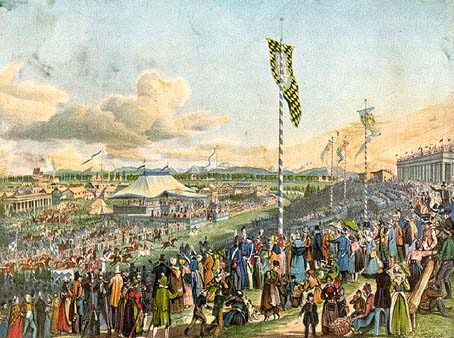
>https://www.oktoberfest.de
I’ve been watching the clock all week, I’m so excited for oktoberfest!
What will Bernd do for oktoberfest? How do you celebrate it?
35 messages omitted.
Finding an Oktoberfest promotion on a Russian online grocery store that lacks compelling or authentic German items can feel like a mismatched marketing attempt.
Russian online grocers (such as Utkonos, Vprok, or localized diaspora markets abroad like Beryozka or Globus) often lean into seasonal global themes for sales events even if their core inventory remains focused on traditional Eastern European staples, local lagers, or standard mass-market imports rather than specialized Bavarian festival beers, giant pretzels, or authentic lebkuchen.
If you're looking to salvage the theme or find better alternatives, tell me:
* What specific food or drink items were you hoping to find?
* Are you shopping through a local diaspora market or an app based inside Russia?
I can help you track down authentic alternatives or suggest a better menu setup.

