


Science
What did you replace god with?


I'm not the op but I'll respond for them >>367431
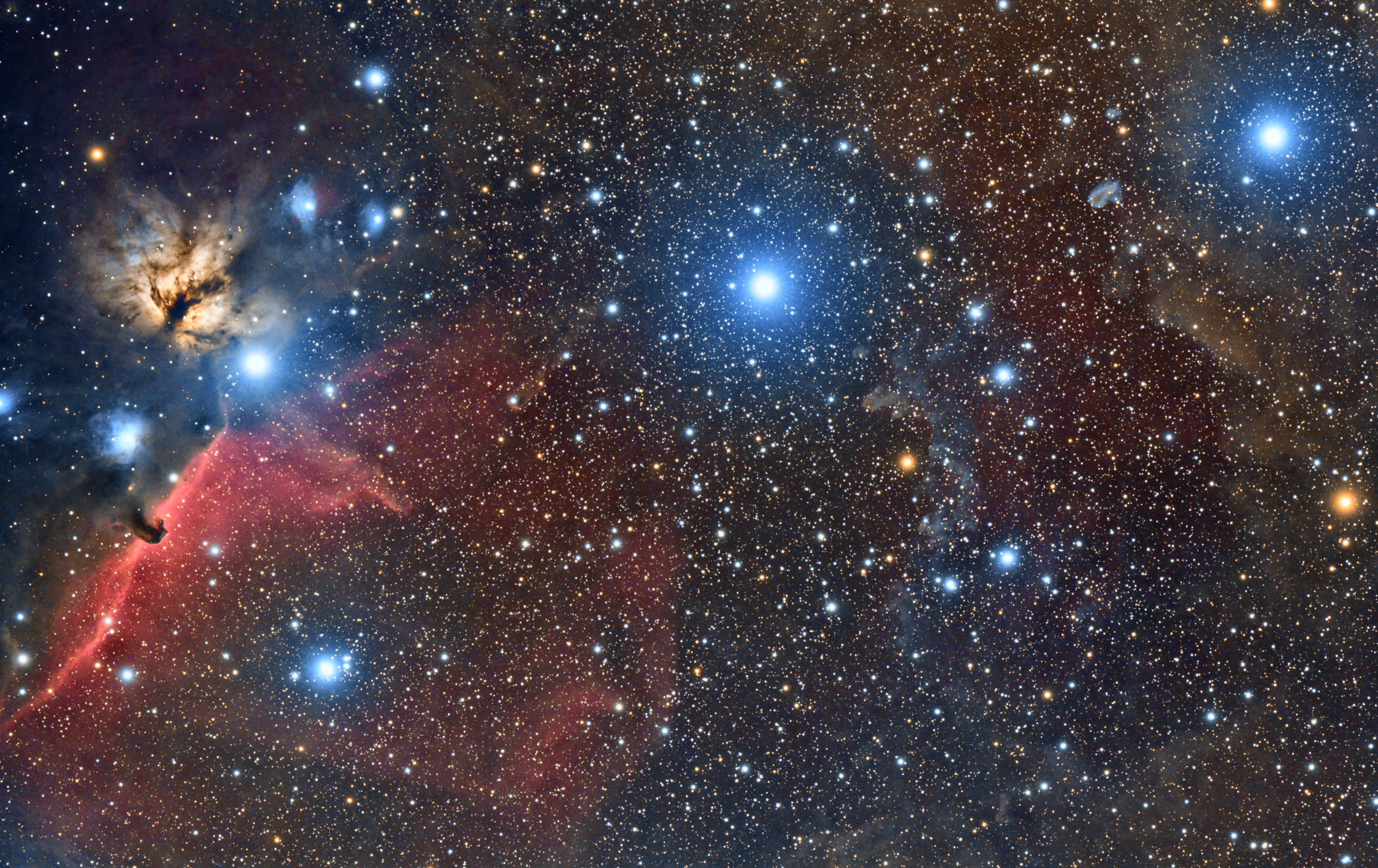
The expansion of our understanding of the universe—from a single galaxy to estimates of trillions of galaxies—profoundly shifts how we think about existence, scale, and our place in the cosmos.
Whether this vastness makes the concept of God "infeasible" depends entirely on how one defines God. This discovery impacts different philosophical and theological perspectives in distinct ways:
1. The Challenge to Anthropocentric (Human-Centered) Beliefs
For traditional frameworks that view humans as the absolute center and sole focus of creation, a universe with trillions of galaxies presents a severe conceptual challenge:
• The Scale Problem: It introduces a staggering sense of human insignificance. If a deity created a universe so unfathomably vast, the idea that this deity is primarily preoccupied with the daily actions of a single species on a microscopic speck of dust can feel improbable.
• The Waste of Space: From a purely functional or human-centric perspective, billions of empty light-years and trillions of uninhabited (or unreachable) galaxies can seem like an unnecessary surplus if the goal was simply to create a home for humanity.
2. The Expansion of Pantheistic and Deistic Concepts
For other philosophical frameworks, cosmic vastness does not disprove a higher power; instead, it redefines it:
• Deism: A deistic view posits a "First Cause" or a cosmic architect who set the laws of physics in motion and stepped back. To a deist, 70 trillion galaxies simply reflect the true, immense scale of that initial spark.
• Pantheism: In pantheism, God is not a person in the sky, but the universe itself—the sum total of all matter, energy, and physical laws. In this view, discovering more galaxies is simply discovering more of "God."
3. Theological Adaptation
Many modern theologians and religious scientists argue that a massive universe actually aligns with the concept of an infinite creator. Their perspective suggests that a truly infinite God would not be limited to a small, cozy cosmos. Instead, a universe of trillions of galaxies matches the scale of a creator that transcends space and time entirely.
Ultimately, the scale of the cosmos forces a choice in perspective: it either dilutes the significance of humanity to the point where a personal god feels structurally implausible, or it elevates the concept of a creator to a level of complexity that completely transcends traditional human mythology.
It is a mind-bending concept to sit with. Are you looking at this from a scientific perspective (like how cosmology impacts philosophy), or are you exploring a personal shift in how you view the universe?
